

On this page
8 sectionsBrowse the main headings and deeper subtopics from this article.
Recommended next
Discover how a text to code AI coding assistant transforms simple prompts into production-ready websites. Learn what to look for in 2026.
RankOnPilot AI
Content Partner
On this page
8 sectionsBrowse the main headings and deeper subtopics from this article.
Recommended next
If you are a founder, freelancer, or agency owner looking to launch a digital product in 2026, a text to code ai coding assistant is the fastest way to turn ideas into production-ready reality. Unlike legacy drag-and-drop platforms that trap you in proprietary ecosystems, modern AI web development tools translate natural language directly into clean, deployable source code.
At its core, this technology bridges the gap between conceptual design and software engineering. You describe the layout, functionality, and styling of your desired website, and the AI generates the underlying architecture. This shift from visual manipulation to prompt-driven creation represents the most significant leap in automated frontend generation since the advent of component-based frameworks.
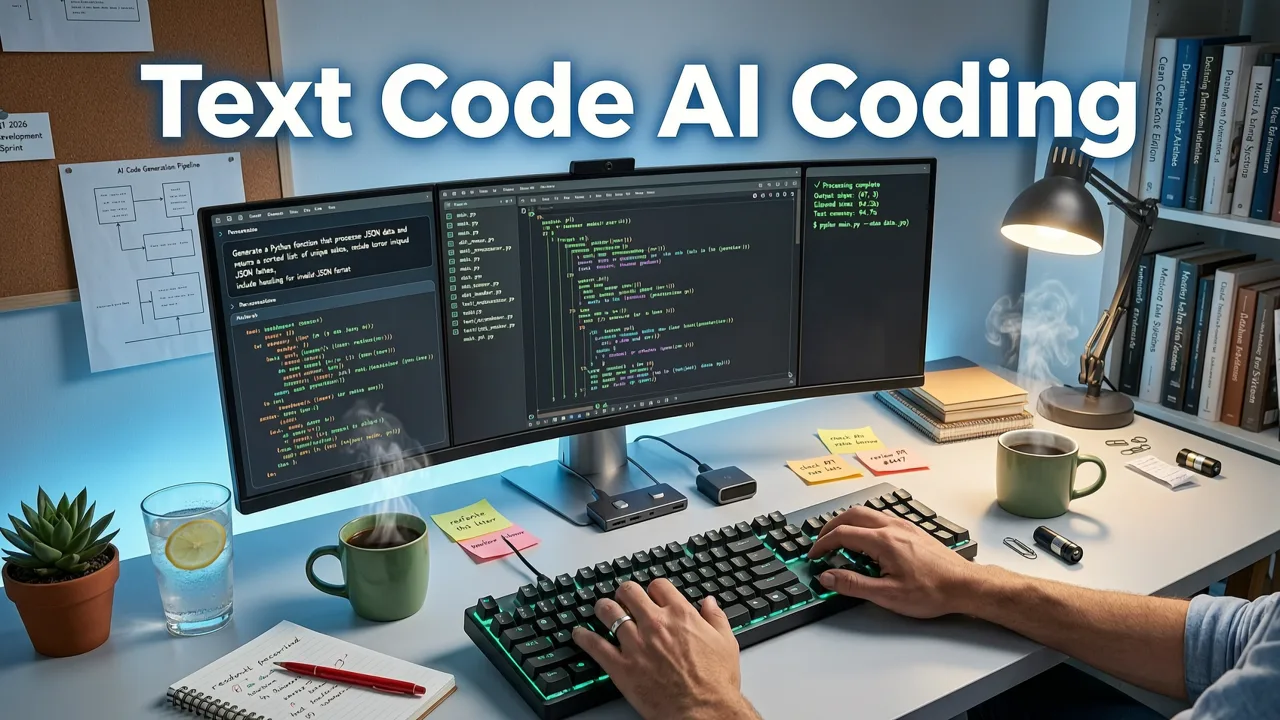
The mechanics behind a natural language to code engine rely on advanced large language models trained specifically on modern web frameworks. When you input a prompt, the system does not merely generate a static image or a locked template; it constructs a functional application.
According to the foundational principles outlined in the OpenAI documentation, the latest generation of models excels at maintaining context across complex file structures, ensuring that a change in a global header reflects accurately throughout the entire codebase.
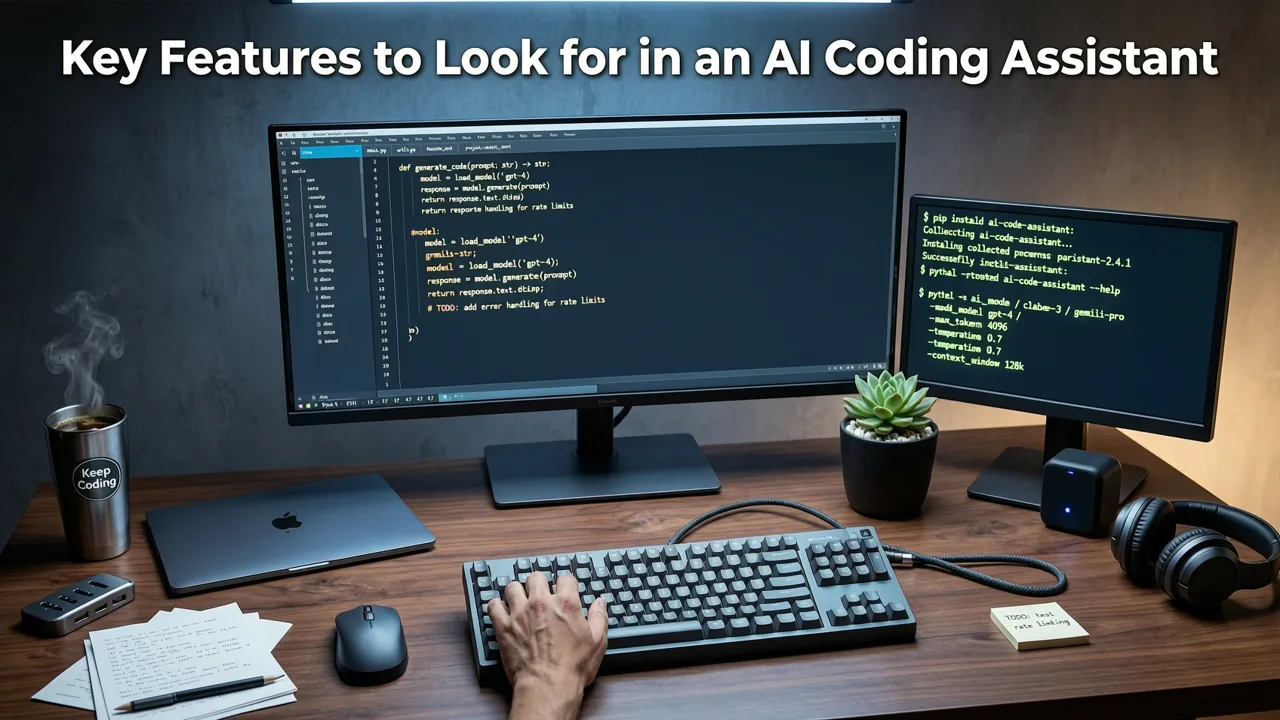
Not all AI tools are created equal. When evaluating a prompt to website generator, professional users should prioritize features that ensure long-term viability and scalability.
The generated code must be clean, modular, and ready for deployment. It should follow industry best practices, avoiding bloated or redundant markup. A true Next.js AI builder will output code that a senior developer would be proud to maintain.
While the AI handles the heavy lifting, you still need control. A high-quality tool provides a built-in code editor alongside a live preview. This dual-pane approach allows you to tweak specific styles or logic without breaking the visual layout.
Mobile-first design is non-negotiable. The AI should automatically generate responsive layouts that adapt seamlessly across devices. For a deeper dive into how this technology handles complex layouts, explore our guide on the AI responsive landing page generator capabilities.
You should never be locked into a platform. The ability to export the raw codebase or deploy directly to a hosting provider with a single click is essential for maintaining ownership of your digital assets.
Understanding the distinction between visual no-code builders and text-to-code AI assistants is critical for making the right technology choice for your project.
| Feature | Visual No-Code Builders | Text to Code AI Assistants |
|---|---|---|
| Input Method | Manual drag-and-drop interface | Natural language prompts |
| Output | Proprietary, locked platform data | Standard, exportable source code |
| Customization | Limited to platform capabilities | Unlimited via direct code editing |
| Vendor Lock-in | High | None (you own the code) |
| Scalability | Restricted by platform tiers | Highly scalable via standard hosting |
Traditional builders often sacrifice performance and flexibility for ease of use. In contrast, a text to code ai coding assistant gives you the speed of a no-code tool with the power and flexibility of a custom-coded application. As noted in Google AI guidance on responsible development, empowering users with transparent, exportable code fosters a healthier, more sustainable web ecosystem.
The quality of your output is directly tied to the quality of your input. Writing effective prompts is a skill that can drastically reduce your development time.
Explicitly state the frameworks you want to use. For example, specify that you need a Next.js application styled with Tailwind CSS. This prevents the AI from defaulting to outdated or less efficient libraries.
Break down your request into logical sections. Describe the header, the hero section, the feature grid, and the footer individually. Detailing the exact components you need helps the AI structure the code more effectively.
Treat the AI as a junior developer. Your first prompt will get you 80% of the way there. Use the live preview to identify areas for improvement, then prompt the AI to refine specific sections. For a comprehensive breakdown of this workflow, read our complete guide on how to create a website with an AI prompt.
ZyloCode was engineered specifically to solve the limitations of early AI generators. It is built for founders, freelancers, and small agencies who demand production-ready code without the overhead of traditional development.
ZyloCode generates clean, semantic Next.js and Tailwind CSS code. This means your website is not only fast and responsive but also easily maintainable by any developer in the future.
With a built-in code editor, you can fine-tune every line of code generated by the AI. Once you are satisfied, you can export the entire codebase or deploy it instantly. There are no hidden fees or restrictive export limits.
Scaling an agency requires tools that can handle complex projects efficiently. ZyloCode’s architecture is designed to support high-volume generation, making it the best AI website builder for agencies in 2026. Whether you are building a simple landing page or a multi-page marketing site, the platform adapts to your workflow.
The evolution of the text to code ai coding assistant has fundamentally changed how we build for the web. By translating natural language into production-ready, exportable code, these tools eliminate the bottleneck between ideation and deployment. For modern professionals, mastering this technology is no longer optional; it is a competitive necessity.
Ready to experience the future of web development? Start building with ZyloCode today and transform your text prompts into powerful, live websites in minutes.
Quick answers to the questions teams usually ask when they apply this workflow.
A traditional no-code builder relies on manual drag-and-drop interfaces and often locks you into a proprietary ecosystem. A text to code AI coding assistant translates natural language prompts directly into clean, exportable source code, giving you full ownership and the ability to host the site anywhere.
Yes, high-quality AI coding assistants like ZyloCode allow you to export the raw, production-ready source code. This ensures you are never locked into the platform and can continue developing the project in your preferred code editor.
No, you do not need prior coding experience to generate a website using natural language prompts. However, having basic coding knowledge is highly beneficial if you want to use the built-in code editor to fine-tune the output or add custom functionality.
Leading AI coding assistants in 2026 primarily support modern, component-based frameworks. The industry standard output typically includes Next.js for the application logic and React architecture, paired with Tailwind CSS for utility-first, responsive styling.
Start with how to use an AI coding assistant.
Apply the playbook
Describe the site you need and ZyloCode writes it in React and Tailwind, with a live preview and a code editor.
Enter your email and we will open your email client with a ready-to-send subscription request for ZyloCode updates.
Related articles
These articles connect closely to the strategy, launch, or optimization themes in this post.

Learn how to use an AI coding assistant in 2026 to build production-ready websites. Discover best practices, prompt strategies, and deployment workflows.

Looking for the best ai coding assistant for nextjs in 2026? Discover how ZyloCode generates production-ready Next.js and Tailwind sites from prompts.

Discover the best ai website builder free tier options in 2026. Compare features, code export limits, and find the right tool for founders.

Learn how to build a nextjs site with ai in 2026. Discover how founders and agencies generate production-ready Next.js and Tailwind code instantly.